
7 Silent Culprits Torching Your Texas Energy Bills
Texas summers hit different, and so do the electric bills. Find out the 7 sneaky reasons your home keeps draining your wallet when the heat turns up.
Your air conditioner is not the problem. It is everything around it.
Every summer, Texas homeowners stare at electric bills that feel less like utility invoices and more like ransom notes. The heat is real, the humidity is relentless, and if your home is not built to fight both, your AC will run itself ragged while your savings quietly disappear. According to the U.S. Energy Information Administration, the average Texas household consumes roughly 1,146 kilowatt-hours of electricity per month, a figure that climbs steeply from June through August when cooling demand is at its peak. That is not just usage, that is money, and a lot of it is being wasted in ways most homeowners never think to check.
The good news is that most of the money-leaking problems in a Texas home are fixable, and fixing even a handful of them can trim hundreds of dollars off your summer bills. This is not about overhauling your entire house or spending a fortune on upgrades. It is about knowing where to look. Here are seven of the most common, most costly reasons your home is working against you when the temperatures climb.

Reason #1: Your Attic Is Acting Like a Furnace
The Hidden Heat Source Above Your Head
Most homeowners think about insulation in the walls, but the attic is where the real damage happens during a Texas summer. When outside temperatures hit 100 degrees or more, an unventilated or poorly insulated attic can reach temperatures between 150 and 160 degrees. That heat radiates directly into your living spaces, forcing your AC to work twice as hard to compensate for what is essentially a built-in heat source sitting above every room in your house.
The fix starts with two things: proper attic insulation and ventilation. Radiant barrier sheathing, added attic ventilation fans, and bumping your insulation up to the recommended R-38 or R-60 level for Texas climates can reduce the heat load on your HVAC system dramatically. Many homeowners who make this upgrade report cooling their homes more efficiently for the rest of the season with no other changes made.
Reason #2: Your HVAC Filter Has Not Been Changed in Months
Small Neglect, Big Consequences
It is one of the most basic maintenance tasks a homeowner can do, and it is one of the most commonly skipped. A dirty air filter forces your HVAC system to pull air through a clogged layer of dust, debris, and allergens. The motor works harder, the airflow is reduced, and the system runs longer to reach the same temperature. In Texas, where your AC may be running eight to ten hours a day during summer, that inefficiency compounds every single day.
Standard 1-inch filters should be replaced monthly during peak cooling season. Thicker pleated filters can go two to three months, but in dusty Texas climates, leaning toward the shorter end of that range is always the smarter call. The cost of a replacement filter is measured in dollars. The cost of ignoring it shows up on your utility bill for the entire summer.
Reason #3: Air Leaks Are Quietly Canceling Out Your AC
If It Can Get Out, Heat Can Get In
Your home has dozens of potential air leak points, and most homeowners have never checked a single one. Door frames, window sills, recessed lighting, attic hatches, electrical outlets on exterior walls, plumbing penetrations, and the gap where your dryer vent exits the wall are all places where conditioned air can escape and hot Texas air can sneak inside. The cumulative effect of these small leaks can be enormous.
A professional energy audit is the most thorough way to identify where your home is leaking, but a basic DIY check on a windy day can reveal a lot. Run your hand along door frames and window edges. Use a stick of incense near suspected problem areas and watch for smoke movement. Common, low-cost fixes include:
- Weatherstripping around doors and windows
- Caulking gaps around window frames and baseboards
- Foam gaskets behind electrical outlet covers on exterior walls
- Draft stoppers at the base of exterior doors
These are afternoon-project fixes that pay back in real dollars every month.

Reason #4: You Have Not Thought About Solar Heat Gain Through Your Windows
The Silent Summer Tax You Are Paying Every Day
Windows are designed to let light in, but in Texas, that light comes loaded with heat. Unshaded glass, especially on south- and west-facing exposures, allows solar radiation to pour into your home and raise interior temperatures even when your windows are tightly closed. The U.S. Department of Energy has noted that heat gain and heat loss through windows account for 25 to 30 percent of residential heating and cooling energy use, and in hot-climate homes with unshaded clear glazing, that figure can climb even higher.
This is a problem that sits at the intersection of two different solutions, and choosing between them is not as simple as it might seem. Exterior shade structures like awnings and retractable shades can intercept solar heat before it ever reaches the glass. Upgraded window glass with low solar heat gain coefficients can reduce how much of that radiation passes through in the first place. Both approaches have real merit, and both come with different cost profiles, payback timelines, and practical tradeoffs.
Austin Hays, owner of Boise Exterior Shade, a company that has been recognized as a leading company in the shade installation space, put it plainly: "Exterior shade solutions stop the heat before it even touches the glass. Once the sun is blocked on the outside, your interior stays dramatically cooler without asking anything extra from your AC."
If you are weighing the cost and long-term value of each approach for your own home, this breakdown comparing awnings and window upgrades walks through the financial side of both options in detail and is worth reading before you call a contractor.
Reason #5: Your Appliances and Lighting Are Adding Heat You Do Not Notice
Your Home's Internal Temperature Contributors
Every incandescent bulb, every older appliance running a full cycle during the hottest part of the day, and every device left on standby adds heat to your home's interior. It is not a dramatic amount from any single source, but collectively, old lighting and inefficient appliances act as mini space heaters that your AC has to offset.
Switching to LED bulbs is the fastest, cheapest fix available. They use roughly 75 percent less energy than incandescent bulbs and produce a fraction of the heat. Beyond lighting, consider running your dishwasher and dryer in the early morning or late evening rather than midday. Shifting those loads to off-peak hours reduces both the thermal load on your home and, if you are on a time-of-use electricity plan, your per-kilowatt-hour rate at the same time.
Refrigerators and freezers that are more than ten to fifteen years old are another common energy drain. Older units run longer cycles and use significantly more electricity than current Energy Star-rated models. If your fridge is older and running constantly, it may be worth calculating the annual cost difference against the price of a replacement.
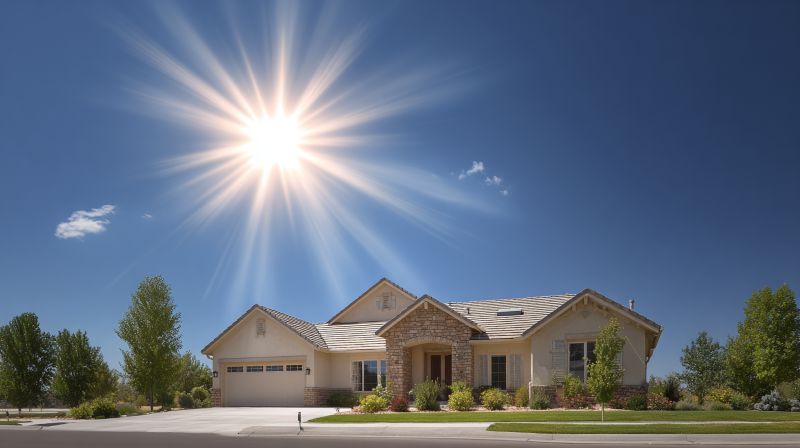
Reason #6: Your Thermostat Is Working Against Your Schedule
Cooling an Empty House Is One of the Most Expensive Habits in Texas
If your thermostat runs at the same temperature whether you are home, asleep, or away at work for eight hours, you are spending money to cool an empty house during the hottest part of the Texas day. It sounds simple, but the savings from correcting this habit are real and immediate.
Smart thermostats allow you to program cooling schedules that align with your actual routine. You can set the temperature higher while you are out and have the home pre-cooled before you return, all without touching the thermostat manually. Most smart thermostat models learn your preferences over time and make adjustments automatically. The energy savings they generate typically offset their purchase price within the first cooling season.
Beyond programming, the temperature you set matters more than most people realize. Each degree below 78 degrees Fahrenheit increases your cooling costs by roughly 3 to 5 percent. That means a household cooling to 72 degrees instead of 78 is spending 15 to 25 percent more on air conditioning for no practical comfort benefit that a ceiling fan could not bridge.
Reason #7: Your Ductwork Is Leaking Conditioned Air Into Unconditioned Spaces
The Air You Are Paying to Cool May Never Reach You
Ductwork is one of the most overlooked energy loss points in a Texas home, and it is one of the most impactful. If your ducts run through an unconditioned attic or crawl space and have gaps, loose connections, or failing insulation, the cool air your system produces can bleed out before it ever reaches the vents in your living areas. Studies have shown that duct leakage can account for 20 to 30 percent of total HVAC energy loss in homes with conventional duct systems.
Symptoms of leaky ducts include rooms that never seem to cool down despite the system running constantly, noticeably uneven temperatures from room to room, and utility bills that feel disproportionately high compared to how much you are running the AC. A duct pressure test performed by an HVAC professional can confirm whether leakage is a factor. Sealing and insulating ducts, particularly in attic runs, is one of the highest-return fixes available to Texas homeowners and often pays for itself within a single cooling season.
Maria Salas, a licensed HVAC technician based in San Antonio who has worked in residential energy diagnostics for over a decade, describes duct leakage as the most underdiagnosed problem she encounters: "I walk into homes where the AC is running perfectly fine as a machine, but the homeowner is paying to cool their attic because nobody ever inspected the duct connections. It is like filling a bucket that has holes in the bottom."
The Bill Is High Because the House Has Gaps
Texas summers are not going to get easier, and the cost of electricity is not going in the wrong direction either. But a home that has been audited, sealed, shaded, and maintained correctly is a fundamentally different financial situation than one that has been left to fight the heat on its own. The seven problems laid out here are not rare edge cases. They are standard features of how most Texas homes lose money every single summer, and most of them can be addressed without a major renovation.
Start with the lowest-hanging fruit, a filter swap, a tube of caulk, a thermostat adjustment, and work outward from there. Some of the bigger investments, like duct sealing, attic improvements, or window shade solutions, carry real upfront costs, but they also carry real payback periods that most homeowners see reflected in their bills within the first year. Your home should work with you in the summer, not against you. The difference between those two outcomes is usually a checklist and the willingness to work through it.